Can You Legally Rent Out Your Basement in Utah?
By Dan Candidi ·
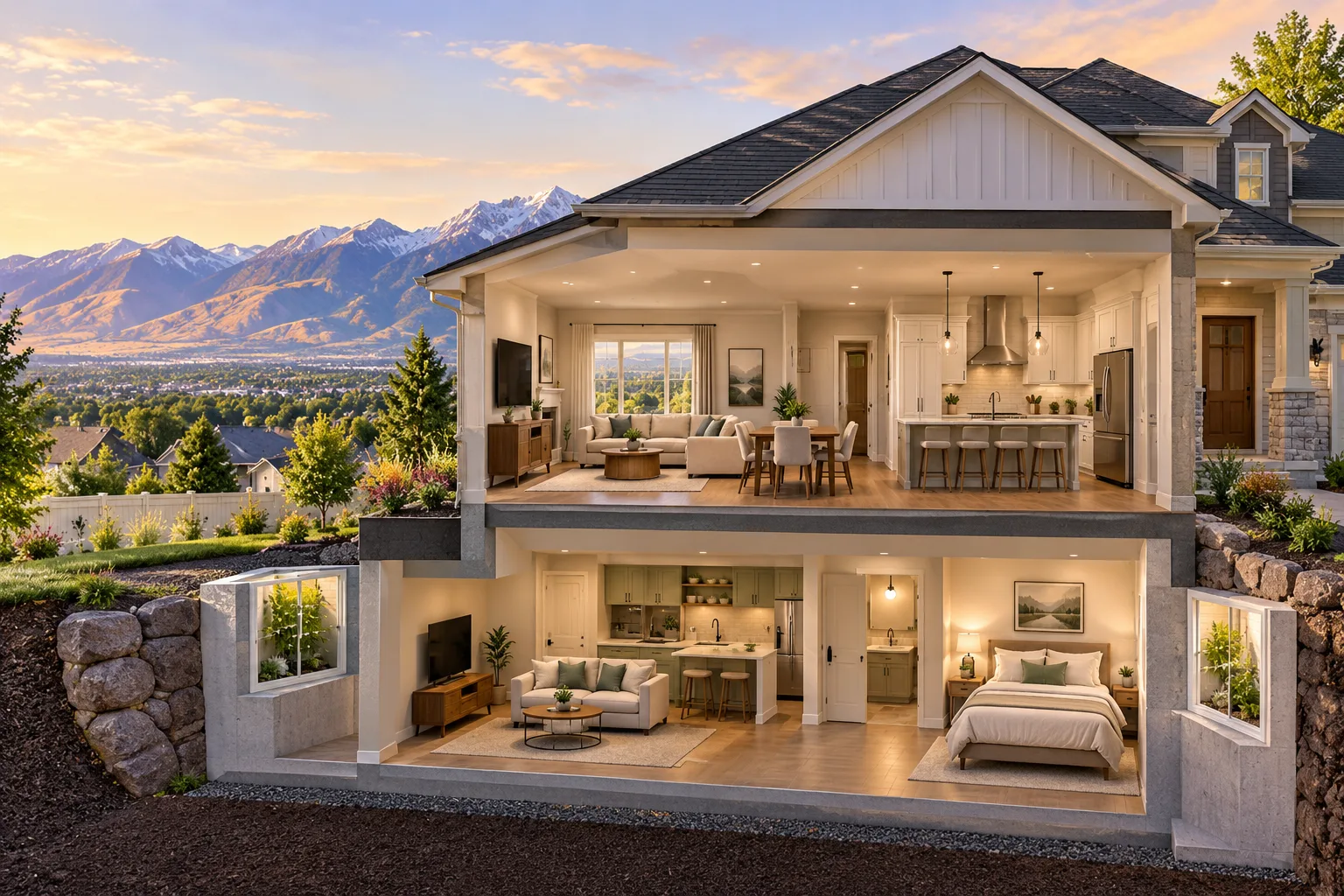
Short answer: Yes, many Utah homeowners can rent out a room or a properly approved basement apartment. But a finished basement is not automatically a legal rental. The rules depend on how the space is used, who lives there, local zoning, and the required permits and safety standards. For example, renting one bedroom while you and your tenant share a kitchen may be treated differently from renting a separate basement apartment with its own kitchen and living space. Both arrangements need the right checks before you advertise the space.
First, what kind of basement rental are you talking about?
A room in your home. You share some living spaces with your renter. That is not necessarily a separate accessory dwelling unit (ADU), which is a second self-contained home on the same property. Your city can have occupancy and shared-housekeeping rules for this arrangement. A separate basement apartment. The basement functions as another dwelling. Utah calls certain qualifying units within a primary home internal accessory dwelling units, or internal ADUs. A separate entrance or kitchenette by itself does not prove a legal ADU exists. A short-term stay. A vacation-style rental is a different question. Utah's internal ADU definition concerns housing intended for rentals lasting at least 30 consecutive days. Check short-term rules separately; do not assume that permission for a long-term basement apartment also permits nightly rentals. A listing might call it a “mother-in-law apartment.” Nice label. Still not a permit.
What does Utah law actually allow?
Utah Code §10-21-101 defines an internal ADU within the footprint of a primary, owner-occupied detached single-family home and for a long-term rental of 30 consecutive days or more. Under §10-21-303, internal ADUs are generally a permitted use in areas zoned mainly for residential homes. That does not mean every house qualifies. The statute allows specific city restrictions, including qualifying zoning exclusions, some parking requirements, permits or licenses, and owner-occupancy conditions. Building, health, and fire codes still apply. This is also why older articles quoting Utah Code §10-9a-530 need a double-check: the internal ADU provision was moved to §10-21-303. The rules for detached backyard ADUs changed in 2026 under a different provision, §10-21-304. Don't mix the detached-unit rules into a basement-apartment checklist. State law opens the door for many internal ADUs. Your local zoning and permit records show whether the space can actually be approved.
How do the rules differ in Salt Lake County and Utah County?
Here are four examples that show why the home's exact address matters. They are not an approval list for every property in the city.
Salt Lake City
Salt Lake City Code §21A.40.200 addresses owner occupancy and its exceptions, permits, and zoning certification. The code says a building permit is required to establish an ADU, and a zoning certificate is part of the process. A rental business-license requirement may also apply. Contact city Planning and Building Services to confirm the steps for your property.
West Valley City
The city's Planning and Zoning FAQ explains different arrangements east and west of 4000 West for single-unit dwellings. It describes qualifying internal ADUs west of that line and shared-housekeeping requirements for room rentals in certain homes east of it. Don't assume your home qualifies or is disqualified just from the street address; have Planning verify the actual zoning and how current state-law exceptions apply.
Provo
Provo's ADU guidance describes a rental-dwelling license, health-and-safety inspection, and a building permit when construction or remodeling is required. It also describes different eligibility depending on location. Importantly, Provo warns that portions of its guidance may change as it implements 2026 legislation. Check with Development Services rather than budgeting around an older fee, parking number or overlay description.
Lehi
Lehi's Planning Applications page provides an internal ADU application and a map of restricted areas. The application description refers to an owner-occupied, detached single-family home. Check your parcel with Lehi Planning and ask which adopted requirements currently apply. Some older detached-ADU guides predate Utah's October 2026 changes, so they should not be copied into current advice about a basement. Outside city limits? Use the authority for your actual unincorporated area. For example, Salt Lake County's ADU guide describes zoning, safety, an owner-occupancy affidavit, and rental-business licensing for properties under its ordinance. Those are not automatically the rules for homes inside Salt Lake City or another incorporated municipality.
What makes a basement safe and eligible to rent?
Fresh paint and a nice kitchenette don't settle a building-code question. You'll want the building department to check the specific space, especially if you are creating a separate unit or changing how the basement is used. Ask about these items:
- Safe exits and emergency escape: Does each sleeping area have the escape route, window or exit required for that room and code edition?
- Fire and life safety: Do smoke alarms, carbon monoxide alarms, and any required fire separation meet applicable rules?
- Space and systems: Are ceiling heights, ventilation, heat, plumbing, electrical work, and cooking facilities appropriate for the proposed use?
- Paperwork: Was the work permitted and inspected, and is a current ADU/rental license or occupancy approval required? These are questions for an inspector, not a do-it-yourself certification list. Utah's building requirements vary with the project and date of work. The Greater Salt Lake MSD's code guide lists state code editions effective July 1, 2026, including the 2021 International Residential Code, with applicable amendments.
What else should you check before advertising the space?
HOA rules and recorded CC&Rs. Some compliant internal ADUs have statutory protections against certain community-association rules and rental restrictions. But a recorded declaration can raise different questions, and the protection depends on the unit complying with applicable law. Utah's Department of Commerce explains the distinction. Check the actual documents, not just a neighbor's interpretation. Insurance and financing. Ask your insurer whether renting a room or apartment changes your coverage. Review your loan documents or ask your servicer or lender whether your loan has occupancy or rental restrictions. These depend on your actual policy or contract; don't assume every mortgage says the same thing. Rental responsibilities. A legal unit still comes with landlord responsibilities, including applicable fair housing requirements. Use neutral, factual advertising and obtain reliable guidance on tenancy and leases. This article does not determine whether a particular homeowner qualifies for an exception.
How can you check your basement's legal status?
- Find your jurisdiction. Confirm whether the home is in a city or an unincorporated county area.
- Describe the plan accurately. Will the tenant share your home, occupy a self-contained apartment, or stay short-term?
- Ask Planning about the address. Confirm zoning, ADU eligibility and any location, lot, owner-occupancy or parking conditions.
- Request the permit history. A basement listed as “finished” is not the same as an approved second dwelling.
- Ask Building/Fire what must be inspected. Get the permit and safety requirements for the specific configuration.
- Confirm licensing and private limits. Check any city rental license, HOA declaration, insurance and financing conditions before listing the space. Keep copies of the city's answers and documents. If you're buying a house because the listing advertises a basement apartment, verify these things during due diligence instead of assuming the seller's description is proof.
Common questions about Utah basement rentals
Is a separate basement entrance enough to make it legal?
No. An entrance is only one physical feature. Zoning, unit classification, permits, safety and any required rental license still matter.
Can I rent out a basement with a kitchen?
Possibly. A kitchen may help make the space function as a separate unit, which can change the approval path. Check with your city's planning/building staff before describing it as an approved apartment.
Do I have to live in the house?
Owner occupancy is part of Utah's statutory internal ADU framework, and cities may apply qualifying owner-occupancy requirements and exceptions. A shared-room rental or a unit on a different property type may be governed differently. Check your specific use and jurisdiction.
What if the apartment was already there when I bought the house?
Ask for the recorded permit history, approvals, inspections and any required license. Prior use, a separate address or a real-estate listing description does not by itself prove the apartment is legal today.
Are the rules the same in every Utah city?
No. State law sets important boundaries, but cities and counties have different lawful restrictions and processes. A city FAQ or zoning map is a starting point, not proof that a particular unit is licensed or approved.
Can I use my basement as an Airbnb instead?
Don't assume so. Vacation and short-term uses can have separate restrictions, and Utah's internal ADU definition concerns long-term rentals of 30 consecutive days or more.
Check the paperwork before you count on rent
If you're buying a home for its rental potential, verify the basement's approval status before relying on that income. I can help you organize the property questions to ask and the local offices to contact, so you're checking the potential before relying on the income. This is general real estate education, not legal, building-code, tax, insurance or lending advice. Rules and approvals vary by address and can change. Confirm the current requirements with the relevant municipal or county authority and qualified professionals. Opinions and observations are mine and do not necessarily reflect the views of eXp Realty or the Lawson Real Estate Team.
Sources and date
Researched October 22, 2026; sources reflect the versions accessible on that date. The statewide legal reference is the Utah Code; city implementation and permit decisions may change.
- Utah Code Title 10, §§10-21-101, 10-21-303 and 10-21-304 (current municipal housing statutes)
- Salt Lake City Code §21A.40.200
- West Valley City Planning and Zoning FAQs
- Provo City ADU guidance
- Lehi Planning Applications
- Salt Lake County ADU guidance
- Utah Department of Commerce: Community Associations and ADUs
- Greater Salt Lake MSD adopted building codes